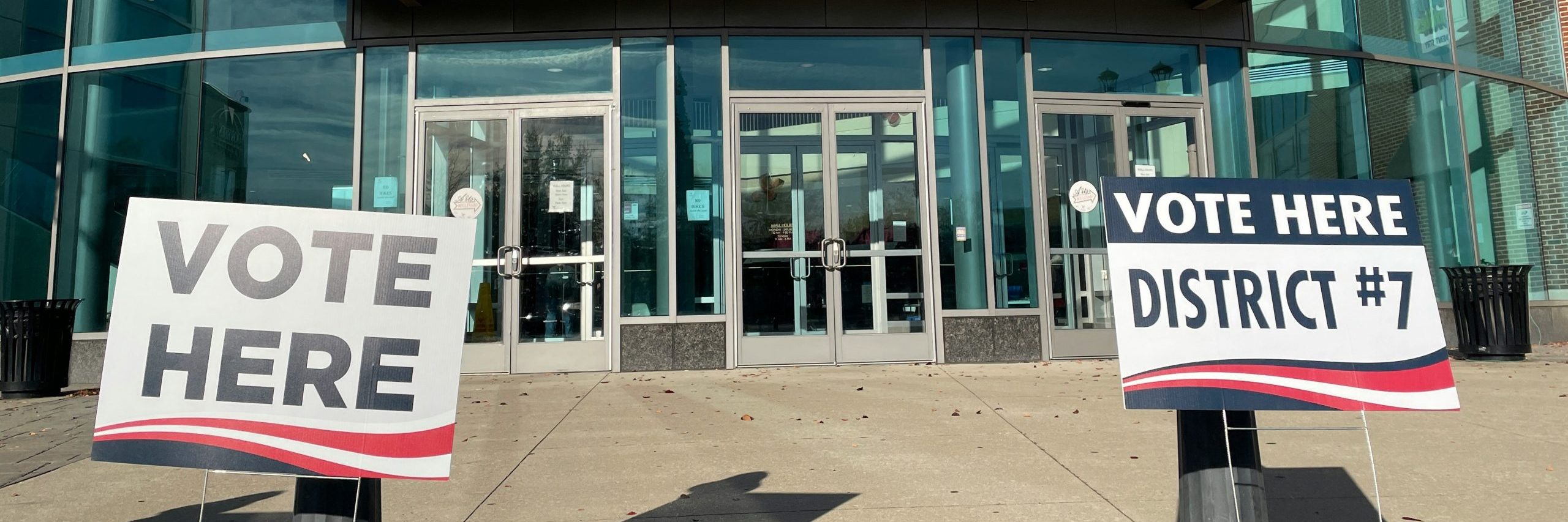
It’s three months until the midterms, and President Donald Trump is once again re-litigating the 2020 election. Judging by his recent prime-time national address, presumably the first of many as he returns to the campaign trail, America’s electoral system could be at risk from widespread noncitizen voting, foreign (particularly Chinese) interference, and cyber vulnerabilities plaguing voting infrastructure.
Trump has prioritized a legislative push to require proof of citizenship for voter registration, which is stalled in the Senate, to the point of refusing to sign a bipartisan law that would lower the costs of homeownership because it didn’t contain his desired provision — putting his own priorities on a collision course with those of his party as it seeks to counter Democrats’ affordability messaging.
His administration’s efforts to compel state officials, charged with managing elections under the U.S. Constitution, to give the federal government greater access to voter rolls have been blocked by the courts. Trump also effectively shuttered an independent commission that helps states run secure elections after unsuccessfully trying to get it to change national voter registration requirements as part of a broader push to bring electoral administration under greater federal control.
Polls show that Trump’s claims of the stolen 2020 election struggle to resonate beyond the president’s MAGA base, with 77% of independents viewing them as mere attempts to sow distrust in election integrity. Still, polls regularly flag “threats to democracy” as the top, or second most important (after the cost of living), issue facing the nation. A majority of voters express concerns about election officials being pressured to change election results (67%), ballots being mishandled or miscounted (57%), or voters facing intimidation as they prepare to cast ballots (52%).
Democrats are especially worried, and data suggests that the administration’s push to change how elections are run could discourage some left-leaning, low-propensity voters from turning out. At the same time, polling data and behavioral evidence from the 2022 midterm cycle — the first national election that followed the Jan. 6, 2021, storming of the U.S. Capitol — indicate that election integrity concerns did deliver marginal gains to Democrats, particularly against Republican candidates that denied Trump’s 2020 loss. The trend continued in 2024, when election deniers underperformed both in the primary and general elections.
Democratic Party leaders are preparing for scenarios where they think the administration might try to disrupt the vote, including swing-state voter roll purges, AI-generated disinformation, and the U.S. National Guard or federal law enforcement personnel deployed to polling places on Election Day. White House officials have so far declined to rule out any such actions, but state-level Republican election officials dispute many of Trump’s claims. Ironically, it’s Democrats’ own lapses, like a glitch in New Jersey’s voting equipment that enabled some noncitizens to cast ballots, that could give unintentional credence to Trump’s election fraud allegations.
Much has been written about how smaller, niche voter groups like infrequent voters or “double haters” (those holding a negative view of both major parties or presidential candidates) shifted right in 2024, helping put Donald Trump over the edge in his close race against Kamala Harris. We decided to dig deeper into the available data to see how these groups are leaning, assuming they make it to the polls in November.
An analysis of 2024 voter data suggests that cycle’s irregular voters (those who skipped 2020 or other recent general elections) were more likely to be Latino, younger people, urban residents, or less-partisan voters without a college degree — the very groups that have been moving away from Republicans as their dissatisfaction with Trump’s economic policies grows. (To be sure, this group is even less likely to vote in midterms than presidential elections, so they may stay home regardless of their political leanings.)
With double haters, the picture is more complex. Trump won this group by double digits in 2024, 2020, and 2016, according to exit polls. In the 2022 midterms, they favored Republicans, who won control of the House; in the 2018 midterms, which Democrats won, they split their vote equally between the two parties.
Interestingly, when asked in April 2024 how they planned to vote in that year’s presidential election, double haters favored Joe Biden by 10 points before the former president’s favorability took a nosedive following his debate loss to Trump; eventually, they chose Trump over Harris by 20 points. This cycle, double haters are favoring Democrats by 26 points, 55% to 29%, which is close to their 32-point preference for Biden ahead of the 2020 election — when they instead ended up voting for Trump by 18 points.
While comparison between groups that dislike both major parties and both presidential candidates from those parties is an imperfect one, we’re taking double-hater polling data with a grain of salt. Some of these voters may be weaker partisans who might return to their political home as the midterms approach.
One point where irregular voters’ presumed shift to the left and double haters’ apparent inclination toward Democrats converge is the intense dissatisfaction with the political status quo that cuts across virtually all voter demographics. In fact, the farther voters tilt to the left, the more likely they are to want “dramatic” or “revolutionary” change, from 60% of Democrats aligned with the Democratic Socialists of America to 26% of MAGA Republicans.
In the meantime, even reliable Republican voters are losing enthusiasm for the midterms over cost-of-living concerns, including high gasoline prices — significant, given that in 2022, people who thought gas prices were a hardship turned out against the party in power (then, Democrats) by 29 points. Republican efforts to vilify Democrats as far-left extremists could backfire with the electorate that’s more likely to back an openly socialist candidate than one endorsed by Trump or aligned with MAGA.
If at least some of these former Trump supporters vote Democrat, that could make a difference in close races. Ultimately, though, turning out low-propensity, politically disengaged voters is a marathon rather than a sprint, considering that people making voting decisions late in the campaign, as these groups tend to be, tilted Republican in 2024, 2022, 2020, and 2016 — but not in 2018, when they swung left as part of that year’s blue wave.
Ever since the start of the war in Iran, prominent figures in the MAGA movement have argued that launching an open-ended military operation in the Middle East, with regime change as part of an initial set of objectives (later downplayed in favor of terminating Iran’s nuclear program), is contrary to the ethos of “America First” and President Trump’s campaign pledge of “no forever wars.”
So far, this debate has been playing out on the Republican Party’s hard-right and libertarian fringes without filtering into the mainstream campaign rhetoric, which largely treats “America First” as Trump’s umbrella brand and portrays the Iran war as a prime example of his “peace through strength” foreign policy agenda. Trump himself famously said “America First” means whatever he thinks it does, and preventing Iran from acquiring a nuclear weapon is as “America First” as can be.
Nevertheless, the definition of “America First” is far from settled — and may be expanding beyond Trump’s control. For Vice President JD Vance, an Iraq war veteran and one-time member of MAGA’s isolationist wing, it has evolved from explicit disavowal of endless foreign wars to a nuanced vision for a Trump Doctrine that allows for limited military engagement if it clearly meets American interest. Laura Loomer, a conservative influencer with close ties to Trump, recently declared support for Ukraine to be “America First” after years of propagating pro-Russian views.
Some Democrats, mainly progressives, are putting their own stamp on “America First” that echoes Trump’s original focus on domestic priorities above all else. We’ll be watching the upcoming Democratic Senate primary in Michigan to see how well the idea resonates with swing-state Democratic voters.
